
Cargo Under Pressure: The Rising Risk of Underinsurance in Global Marine Transport

The global logistics ecosystem is constantly evolving, changing how cargo moves, what it costs to transport and where risks can arise along the way.
Changes in marine transport are presenting new challenges for Australian businesses, including a growing risk that cargo insurance arrangements set several years ago may no longer reflect the value of goods being shipped or the way supply chains operate today.
Over recent years, geopolitical conflicts, extreme weather and the impacts of changing trade conditions have reshaped global supply chains. With 99% of Australia’s international trade volume moved by sea, Australian cargo owners and shippers can be particularly exposed to these changes.
Having adequate cargo insurance, also known as transit insurance or import-export insurance, can help businesses manage the financial impact when goods are lost or damaged.
Read on for a practical look at today’s market conditions, the risk of underinsurance and the questions operators and brokers should be asking to make sure cover keeps pace with the way businesses trade.
Key takeaways
- Shifting supply chains are creating new cargo risks. Geopolitical tensions, extreme weather, industrial action and rising freight costs are leading businesses to use different routes, ports and operators. More handling points mean more opportunities for loss or damage.
- Underinsurance is a growing concern. Freight costs, duties and stock values have changed, but many businesses’ insured amounts haven’t kept pace. A policy limit set a few years ago may no longer reflect the current exposure.
- Regular policy reviews are critical. Businesses should check that their insured values, cargo types, routes and policy limits still reflect how they operate today. Cargo insurance brokers can play an important role in these conversations.
- Recovery starts before loss occurs. Good documentation, strong transport records and prompt reporting can strengthen a business’s recovery position if something goes wrong.
Supply chain disruptions affecting operators today
The way cargo moves has changed considerably in recent years. Geopolitical tensions and changing regulations can affect shipping routes, while extreme weather can disrupt ports and freight flows. Industrial action, labour shortages, rising freight costs and longer transit times can create further pressure throughout the supply chain.
For businesses, the result can be changes to where cargo travels, how long it spends in transit and how many times it is handled along the way.
“One of the biggest challenges we’re seeing from the disruption is that cargo isn’t necessarily moving the way that it previously has,” says NTI’s Logistics Risk Engineer, Chelsea Neely.
“Businesses now have to adapt and possibly use different shipping routes and ports. This introduces more handling points, which pose an opportunity for loss or damage. Also, different routes means different weather, different operators, and workers with different levels of experience.”
Chelsea recalls a business who experienced a major loss from a rerouted shipment of shoes.
“The glue on the shoes had melted because the container took an alternate route to a different wharf, where the temperature was a lot higher,” she says.
Changing routes, increased handovers, additional parties, congestion and rising transport costs can all alter the risks businesses face, sometimes in ways that aren’t obvious until a loss occurs.
The hidden risk of underinsurance
NTI's National Product Manager – Cargo and Carriers, Nick Aiello, says changing costs are leaving some Australian cargo owners and operators at risk of underinsurance.
“Freight and fuel costs, import duties, exchange rates and stock values have all shifted over the last couple of years,” Nick says.
These changes can increase the total value at risk. Replacement freight, emergency transportation and expedited delivery can also cost more following a loss.
“But in most cases, businesses’ insured amounts haven’t changed, or they haven’t moved at the same pace.”
Unlike some other insurance products, cargo policies don’t automatically index their insured values. A limit established several years ago may therefore no longer reflect the value of a business’s largest shipments, current freight costs, duties and charges or peak periods of exposure.
“This means that policies set several years ago, which may have felt appropriate at the time, may no longer be relevant or reflect a business’s current risks,” Nick says.
NTI’s Head of Marine Portfolio, Daniel Morrison, adds that rising costs can also affect risk elsewhere in the supply chain.
“If transport companies are facing unexpected costs that they haven’t been able to fully recover, this can delay equipment maintenance, extend the use of ageing equipment and ultimately increase the likelihood of cargo loss,” he says.
For businesses and brokers, the important question is whether declared values and policy limits still reflect the actual exposure today.
Reviewing your policy
As supply chains change, cargo policies need to keep pace. Regular reviews can help identify whether cover still reflects current trading conditions, routes, values and exposures.
According to Nick, the key questions to ask are:
- How have your cargo values and required policy limits changed?
- Where could accumulations or congestion occur in your supply chain?
- Does your policy reflect your current shipping routes and countries?
- Have your cargo types changed?
- Who are you relying on, and at what point does the risk sit with you?
Cargo insurance brokers have an important role to play in helping customers identify these changes before they become an issue at claim time. They can also support you in finding the right insurance provider and securing adequate cover.
“For brokers, there’s real value in asking better questions before loss or damage happens,” Nick says.
Strengthening your recovery position
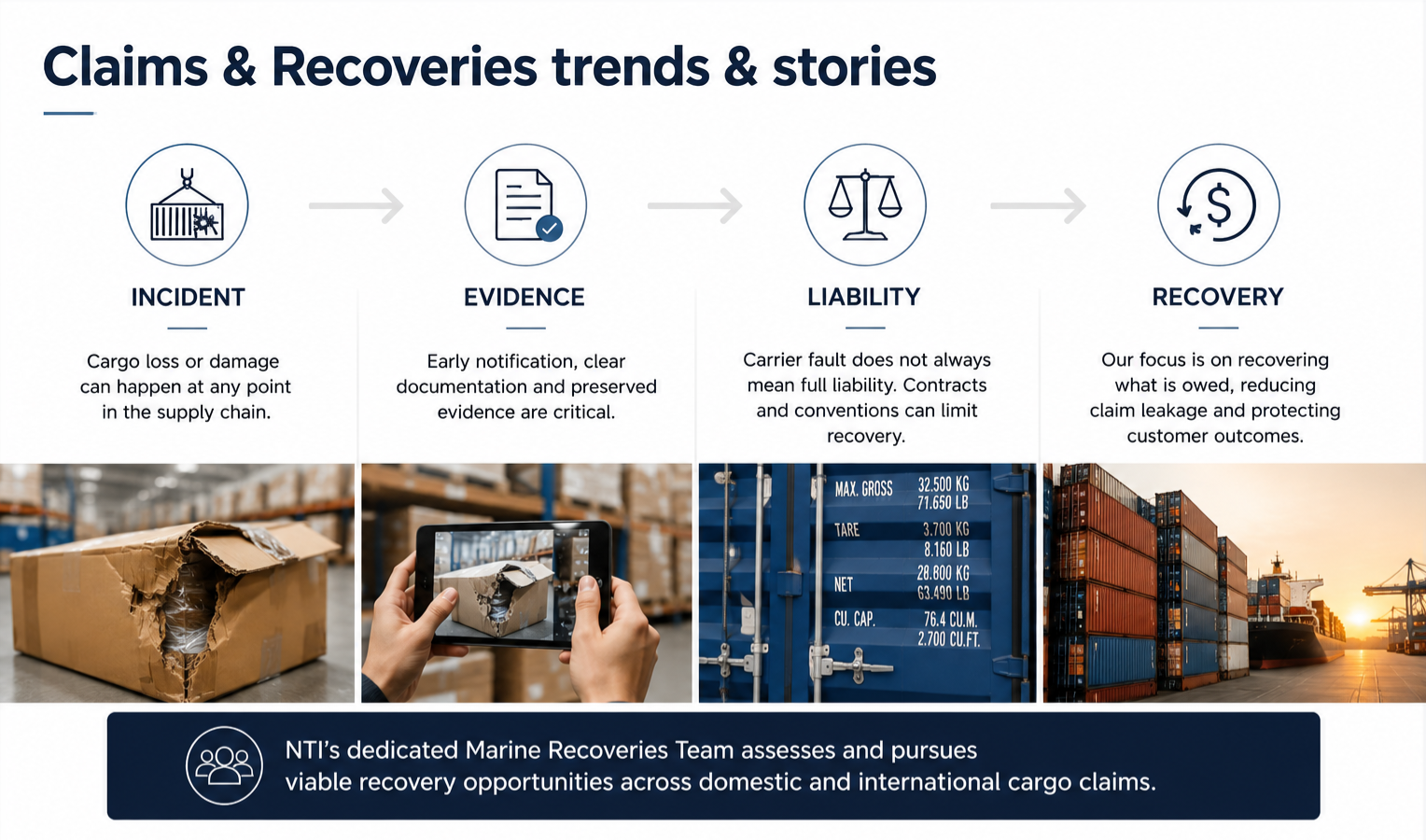
When cargo is lost or damaged and a claim is made, it may be possible to recover funds from responsible parties to offset the claim and minimise the impact on your financial position and claims history.
NTI’s Marine Recoveries Team Manager, Tye Joyce, says marine recoveries have become more difficult as supply chains involve more parties, handovers and contractual arrangements. Businesses can strengthen their recovery position by taking action well before an incident occurs.
“Recoveries are sometimes viewed as something that happens after the claim has been paid,” he says. “In reality, recovery outcomes are often determined much earlier, when contracts are signed, cargo is packed, transport documents are issued, goods are delivered, or damage is first discovered.”
Tye recommends:
- Inspecting cargo promptly and recording any damage on delivery
- Retaining packaging and taking timestamped photographs
- Collecting available data, such as container tracking and temperature records
- Notifying your insurance provider, broker, and relevant carriers as soon as damage is discovered
- Making sure your cargo insurance stands on its own rather than assuming carrier liability will cover the loss.
These steps can provide stronger evidence of what happened and help preserve recovery opportunities following a loss.
Keeping cover aligned with the way you trade
The common thread across these risks is change. Cargo values can increase, routes can move, goods can spend longer at ports and warehouses, and businesses can begin trading with different suppliers or transporting different products.
The question is whether the insurance arrangements have changed with them.
Regular conversations between businesses, brokers and insurance providers can help identify where policy limits, routes, cargo types or other aspects of cover no longer reflect current operations.
Our marine specialists work across underwriting, claims, recoveries and risk engineering, giving businesses and brokers access to expertise across different stages of the cargo lifecycle.
“By having those conversations, we can help operators protect the way they trade today and prepare for how they may need to trade tomorrow,” Nick says.
For businesses facing continued supply chain disruption, reviewing cover before something goes wrong can help ensure the policy reflects the risks and values actually moving through the supply chain today.
Learn more about these topics in our Cargo in Practice: Risk, Cover & What to Watch webinar on demand.
© 2026 NTI Limited ABN 84 000 746 109 AFSL 237246. Limits and exclusions apply.
This article contains general information only and does not take into account your objectives, financial situation or needs. NTI bears no responsibility, and shall not be held liable, for any loss, damage or injury arising directly or indirectly from your use of or reliance on the information in this article.