


When a heavy vehicle rolls over, getting it upright and off the road is only the beginning.
There's the immediate incident response, the recovery of the vehicle and its load, the damage assessment and the specialist repairs required to get the truck back to work. Each stage involves different people, equipment and expertise, and decisions made early in the process can affect how quickly the truck returns to the road.
On 1 October 2026, we gave insurance brokers a firsthand look at what that process involves, bringing them together at specialist heavy vehicle repairer Truckrite in Dandenong South, Victoria, for one of our Truck Rollover & Accident Assist Professional Development Days.
The event featured a truck rollover recovery demonstration and a behind-the-scenes tour of Truckrite's facilities, helping brokers understand the challenges involved in heavy vehicle accident recovery and the specialist network we draw on to support our customers.
Jason Chappell, NTI's State Manager Vic/Tas, says the experience was designed to give brokers practical insights they can take back to their clients.
“This is about creating an immersive experience for brokers,” Jason says. “It takes them beyond the Product Disclosure Statement and gives them real-life insight into what we do behind the scenes to help customers when they need us.”
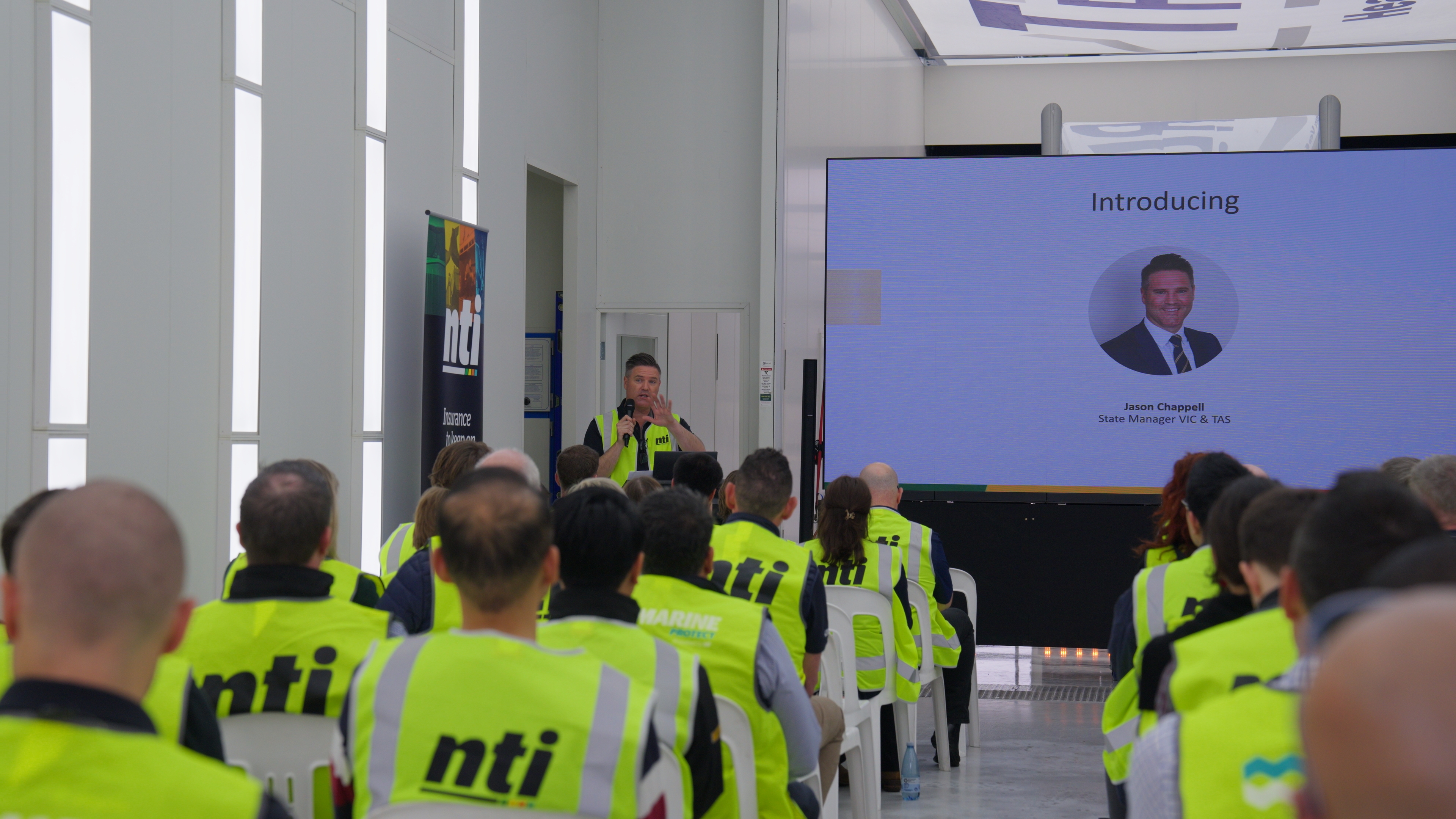
Jason Chappell from NTI presenting to a room full of insurance brokers
The first hours after a truck rollover
After a truck rollover, the response moves through several stages: making the scene safe, heavy vehicle recovery, damage assessment and repairs. Our claims team starts coordinating that work as soon as an incident is reported.
“When a rollover comes in, our first priority is always the wellbeing of everyone involved,” says Monica Torcasio, NTI’s National Legal Claims Manager.
“From there, we work to establish what's happened and understand the extent of the damage. That might involve speaking to the driver, recovery operators or other parties. We also need to determine whether traffic management, driver accommodation or clean-up is required, so we can get the right people involved and respond quickly and safely.”
Depending on what the truck is carrying and where the rollover occurs, recovery can involve additional challenges. Spilled cargo may need to be collected, livestock may need to be recovered and dangerous goods may require specialist environmental remediation.
“The longer a spill is left, the greater the potential cost to the customer and the greater the risk to the environment,” Monica says.
Having claims team members in every state means we can draw on local knowledge to identify appropriate recovery providers, repair facilities and other support services, even when a driver experiences an incident interstate.
Operators can help by contacting NTI Accident Assist as soon as possible, so the team can coordinate the next steps, including recovery arrangements and transporting the vehicle to an appropriate repair facility.
“Once it’s safe to do so, photos of the vehicle, the scene and any cargo can be really valuable,” Monica says. “They help us understand what’s happened and what needs to be done before recovery gets underway.”
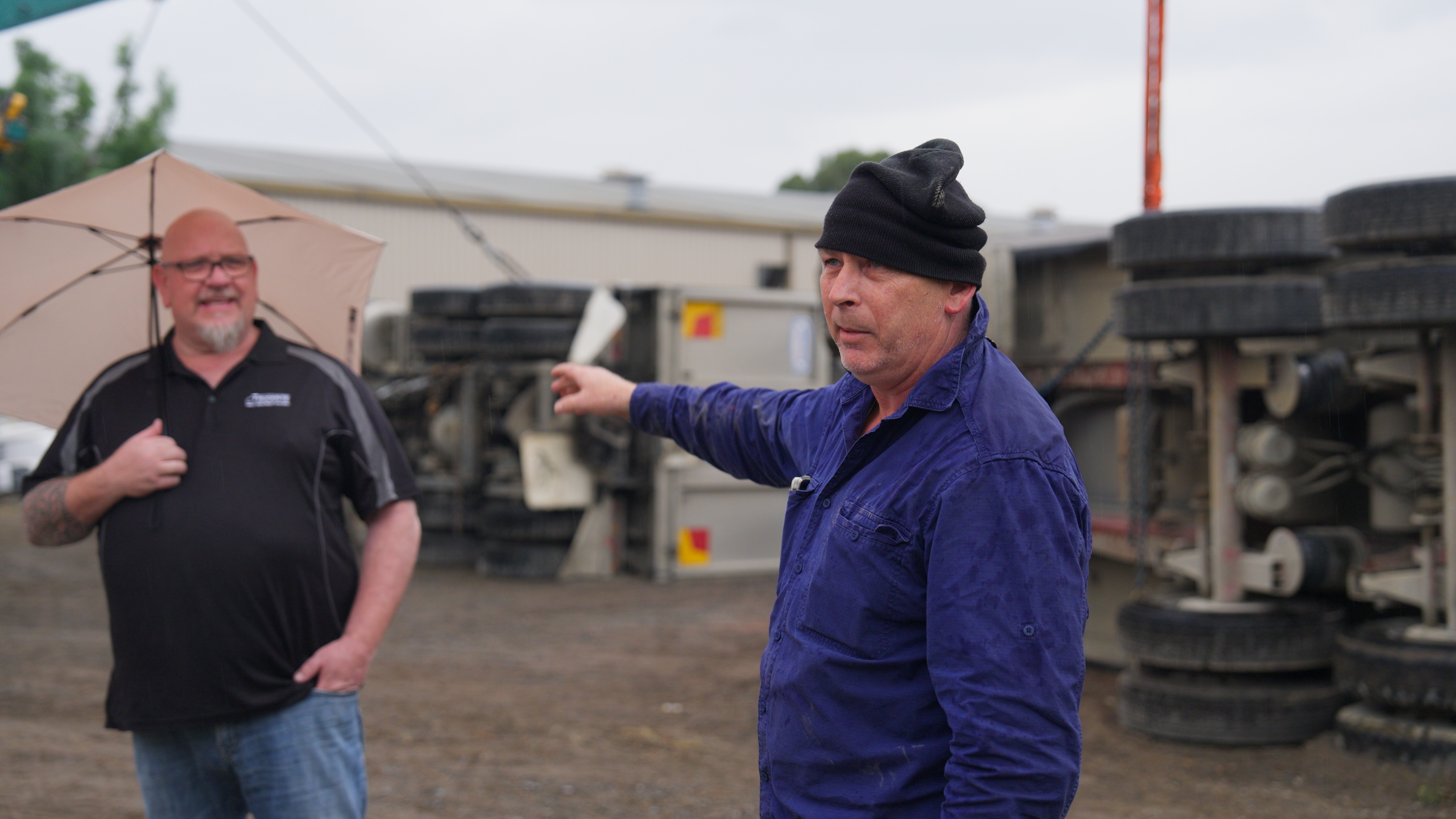
Mark Battams from Truckrite (left) and Jason Berry from AAA Towing Service (right) talking through truck rollover demonstration
Why speed and coordination matter after a truck rollover
The consequences of a rollover for a transport business can continue long after the scene has been cleared.
A truck sitting in a repair workshop is a truck that isn't earning income. Scheduled deliveries may be disrupted, drivers may be unable to work and customers further along the supply chain may be affected.
The impact can be particularly significant for smaller operators, where one vehicle might represent a substantial proportion of the fleet.
Adam Craft, NTI's National Manager – Repairer Networks, says minimising downtime is one of the most important considerations throughout the recovery and repair process.
“For a small fleet, downtime means they're not making money, which can have a significant impact on the business,” Adam says. “It also means someone is out of work because the truck isn't on the road.”
That’s why decisions made in the first hours after a rollover matter. Getting the right recovery operators, assessors and repairers involved from the outset keeps the process moving and reduces the risk of avoidable delays.
Speed, however, needs to go hand in hand with safety. Returning a vehicle to work quickly is only beneficial if the repairs have been completed correctly and the truck is safe to operate.
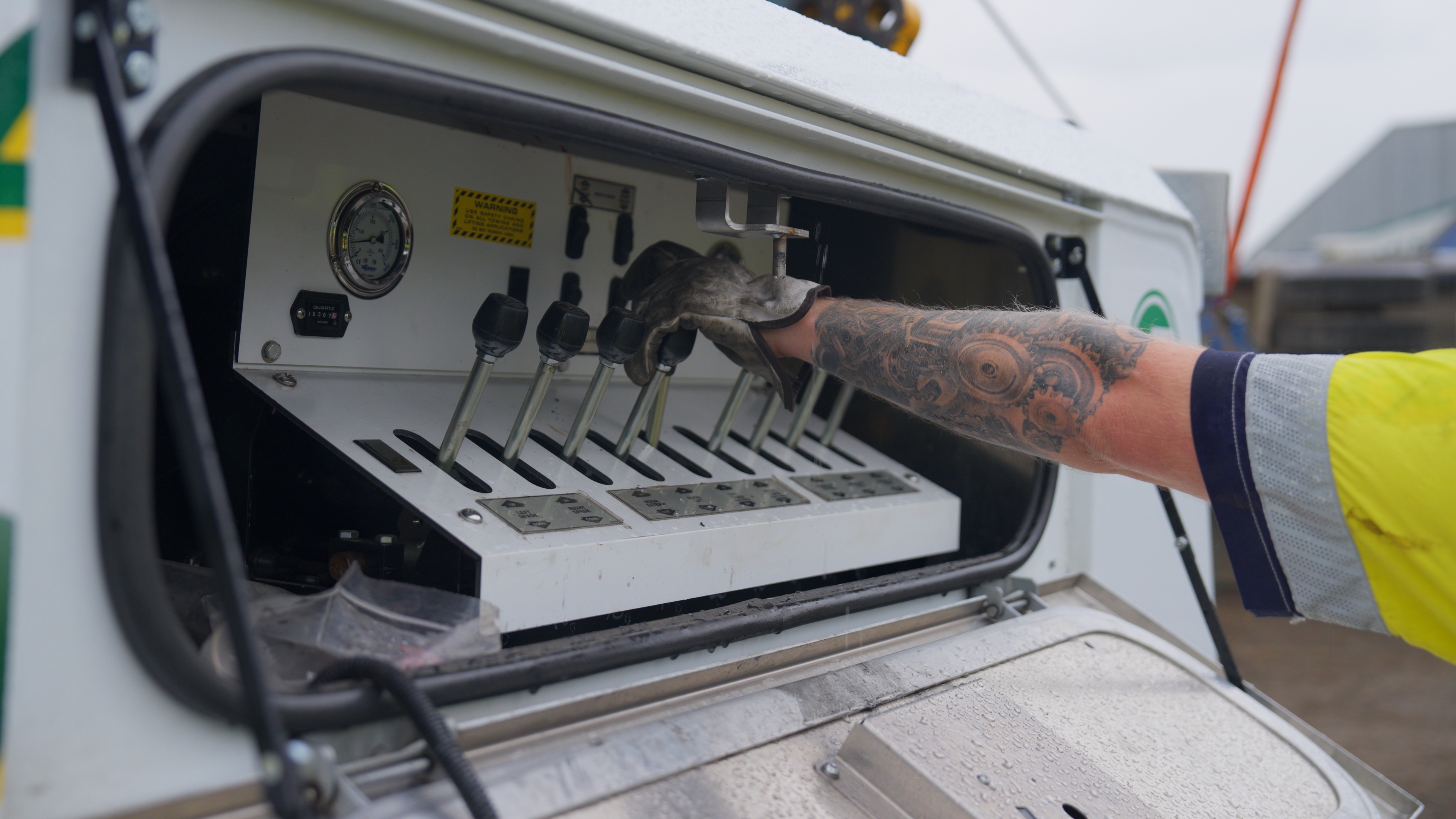
Person from AAA Towing Service operating the tow truck during the truck rollover demonstration
How are heavy vehicles repaired after a rollover?
At Truckrite, brokers saw the scale of the work involved in repairing a heavy vehicle after a serious accident.
Unlike standard truck smash repairs, a rollover can cause damage that isn’t immediately visible.
Because the truck has been on its side, potentially with the engine still running, components such as the engine and gearbox need to be checked for damage. The chassis may also require specialist inspection and straightening before repairs to the cab, bodywork and other components can be completed.
James Malotsis, Managing Director of Truckrite, says the facilities needed to carry out these repairs are extensive.
“To be a heavy vehicle repairer, you need advanced equipment and tooling,” James says.
“At Truckrite, we have six different spray booths with different capabilities, along with a twin chassis-straightening system that allows us to carry out chassis repairs and return vehicles to OEM standards.”
The facility also brings together panel beaters, spray painters, sandblasters, mechanics, engineers and other specialists, supported by dedicated mechanical facilities, diagnostic equipment and fabrication capabilities.
For the brokers attending, seeing these processes in person provided a new appreciation of the work involved.
Brad Hurd, Account Manager at AEI Insurance Broking Group, was particularly impressed by the thoroughness of the repairs.
“Walking around the workshop today and seeing how calm, methodical and clean everything was gives you real reassurance that they're doing a good job with our clients' trucks,” Brad says.
“Nothing is being rushed. They're making sure everything is done properly and testing for safety. They're looking deeper into the truck to make sure there aren't problems that could emerge two years down the track.”
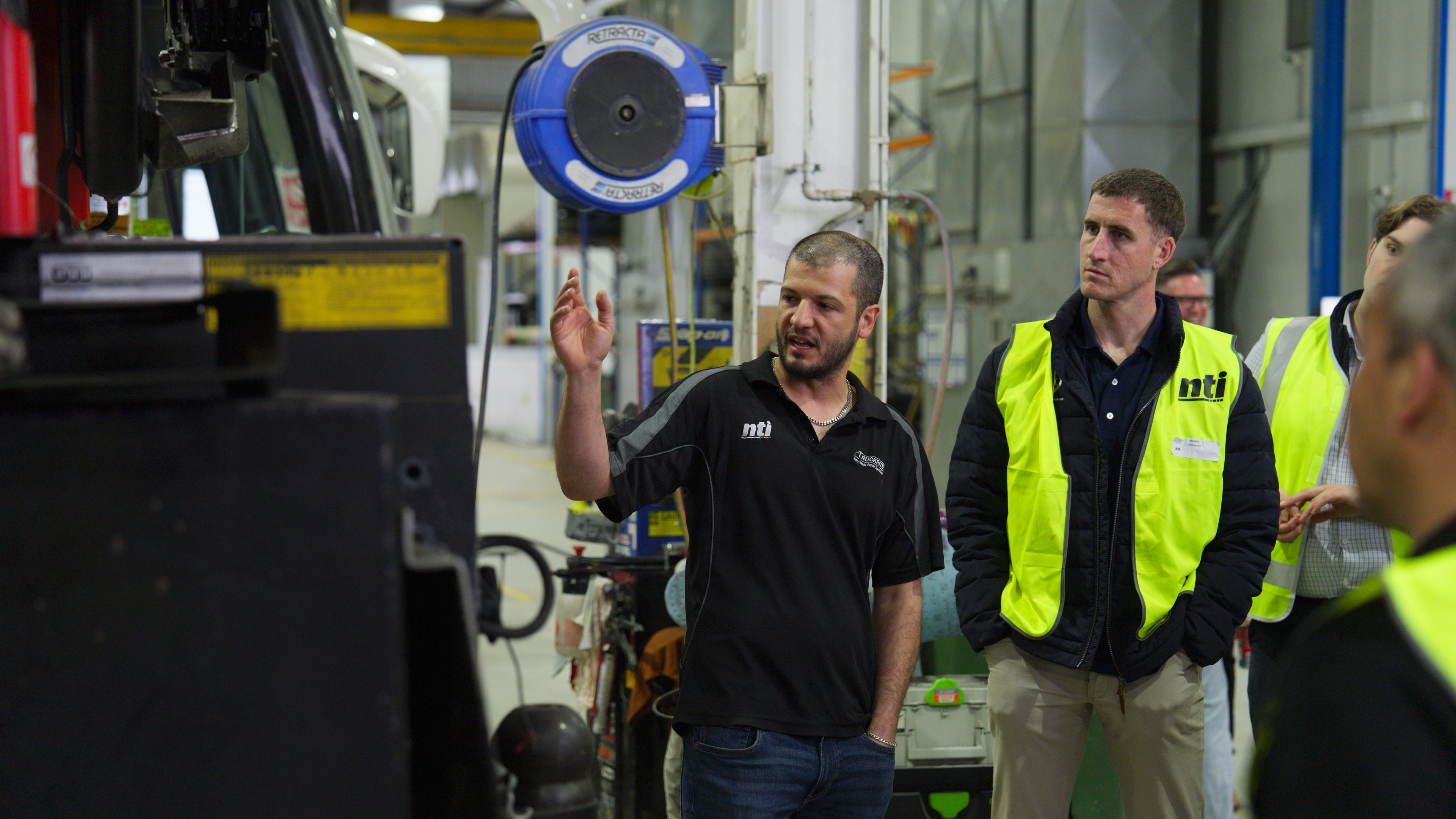
James Malotsis from Truckrite talking brokers through components of the workshop
How NTI’s national truck repair network gets vehicles back on the road faster
The specialist capabilities on display at Truckrite also demonstrated the role NTI's Premium Repair Network plays in helping customers get back on the road.
Our Premium Repair Network is a national truck repair network of approved partner repairers, each of which has met our standards for efficiency, safety and cost-effective repairs. Truckrite is one of these Premium Repairers.
These established relationships provide access to the equipment and expertise required for heavy vehicle repairs, while helping reduce some of the delays that can arise during the claims process.
James says the arrangement cuts out two common sources of delay.
“Being part of NTI's Premium Repair Network allows us to start repairs from day one,” he says. Because Premium Repairers have already been assessed and approved by NTI, they have automatic authority to begin work without waiting for the usual claim authorisation.
“On top of that,” James adds, “we have access to NTI's national parts network, which significantly reduces delays in ordering parts and helps ensure we have them on site when we need them. Ultimately, that means we can get the vehicle back on the road sooner.”
Parts availability can be a significant consideration in commercial vehicle repairs, particularly when components need to be sourced from overseas.
During the workshop tour, brokers also learned how Truckrite can fabricate certain components on site, including fibreglass and sheet metal parts, when replacements aren't readily available.
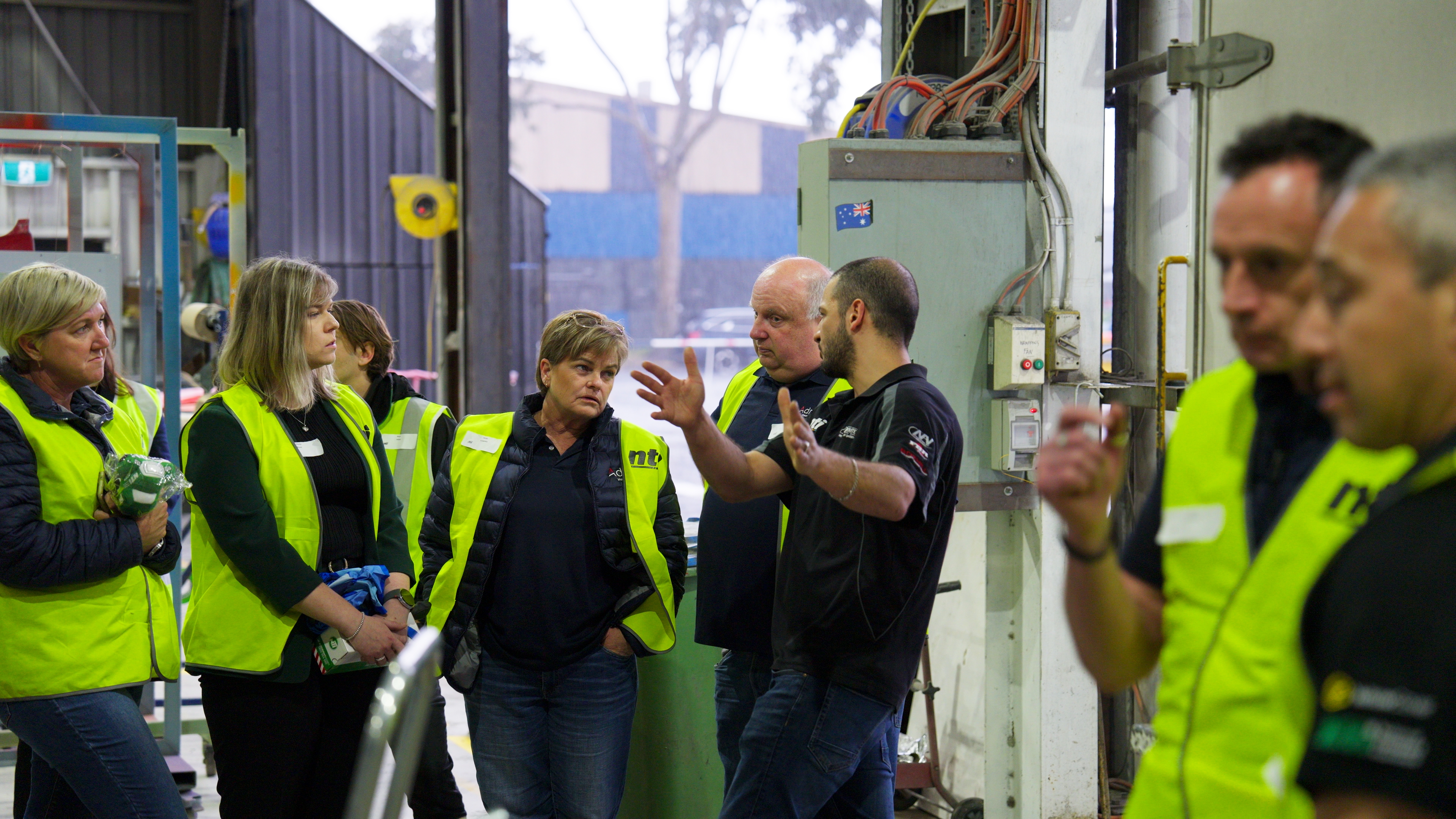
James Malotsis from Truckrite talking brokers through components of the workshop
Better-informed brokers, better-supported customers
Beyond the rollover demonstration and specialist equipment, brokers came away with a clearer understanding of how the different stages of a claim fit together, and what that means for their clients.
Bailey Reed, Account Manager at Sage Insurance, says the day underlined the value of early contact with NTI.
“If one of my clients had a rollover tomorrow, I’d encourage them to use the NTI Accident Assist number straight away,” Bailey says. “I think it’s probably underutilised in the transport sector. Traditionally, a driver might call their boss and leave it to them to handle, but getting NTI involved early can save a lot of time and trouble down the track, whether that’s with clean-up costs, trauma counselling or other support.”
Brad says the day reinforced the value of finding out early what a truck was carrying.
“After today, the first thing I’d ask a client following a rollover is what they’re carrying,” Brad says. “Are there any spills? Are they transporting livestock? That way, we can get NTI involved quickly and arrange any necessary clean-up sooner rather than later.”
Molly Ross, Managing Principal at Adroit Insurance & Risk, wants to help clients prepare before an incident occurs.
“After learning more about NTI's Accident Assist service, I'd look at setting up an incident response plan with my clients, particularly those who operate around the clock,” Molly says.
“That way, NTI knows in advance how the customer would like things handled if an incident occurs.”
Those are the kinds of outcomes we’re looking for when it brings brokers behind the scenes of its claims and repair operations.
As Jason explains, the benefits ultimately extend to the transport businesses relying on us when something goes wrong.
“It’s really important for brokers to understand what happens after a rollover so they can set clear expectations with clients about the recovery and repair process,” he says. “It also helps build customers’ confidence in the repair process and gives them a better understanding of how long it might take to get their truck back on the road.”
By bringing brokers and specialist repair partners together before an incident occurs, we’re helping make sure customers get informed support when they need it most.